.png)


Watch
- Case Material: Stainless steel
- Diameter: 41 mm
- Height: 10.5 mm
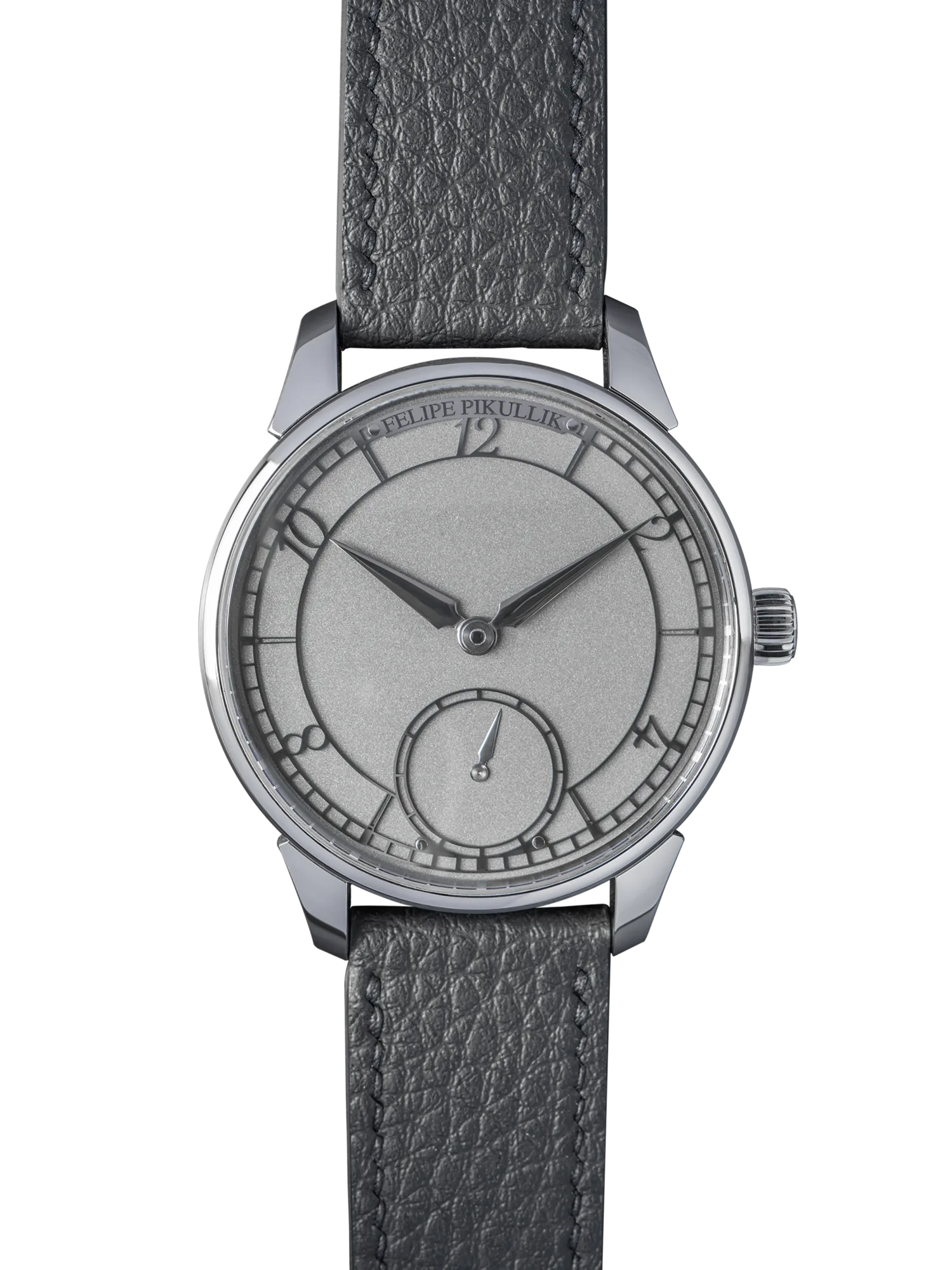
- Dial: Rhodium-plated frosted brass
- Strap: Calfskin strap with stainless steel pin buckle
- Origin: Made in Berlin

The HTH is rooted in a quiet sense of respect, shaped as a tribute to John Harrison and his pursuit of precision. His work redefined how time could be understood, not through ornament, but through clarity, structure, and purpose. For Felipe, this legacy is not something to replicate, but something to carry forward. It reflects a way of thinking where every decision follows intention, and where mechanical understanding takes precedence over decoration. This philosophy continues to define the HTH today, not as a reference to the past, but as a living idea expressed through balance, proportion, and restraint.

The dial is defined by restraint. Its sandblasted brass surface, finished in black rhodium, absorbs light rather than reflecting it, creating a quiet depth that reveals itself over time. A polished chapter ring introduces structure and contrast, framing the dial without disturbing its calm presence. Different numeral styles allow for subtle individuality, while remaining grounded in the same design language. Nothing feels added. Every element exists with intention, forming a composition that is clear, balanced, and quietly confident on the wrist.

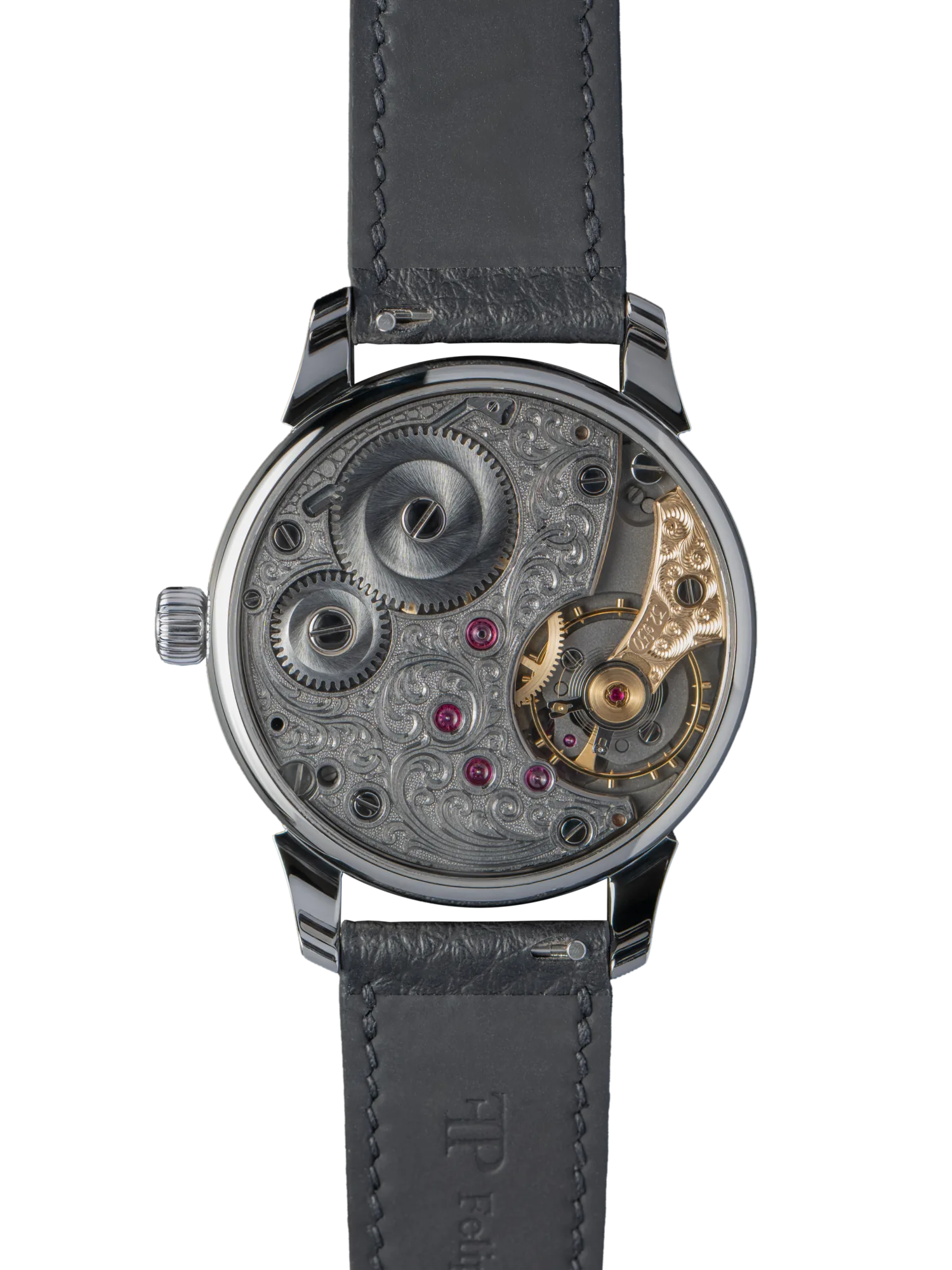
The movement carries the strongest connection to its inspiration. Hand-engraved bridges follow a language where decoration is guided by structure, giving each surface depth and individuality shaped by hand. Dark rhodium tones create a calm foundation, while the engraved balance cock introduces warmth and contrast, forming a subtle focal point within the composition. There is a quiet dialogue between past and present, where traditional craftsmanship and contemporary execution come together in a way that feels natural, honest, and enduring.

The story behind the name
In the early eighteenth century, the greatest danger at sea was not the weather. It was time.
Sailors could read their latitude from the sun and the stars, but their longitude, their position east or west, depended on knowing the exact time at their home port while far out at sea. No clock of the day could keep time on a rolling ship, and countless vessels were lost. In 1707 a British fleet ran aground off the Isles of Scilly, a disaster widely blamed on poor navigation that cost well over a thousand lives. In 1714 Parliament responded with the Longitude Act, promising a reward of up to £20,000 to whoever could solve the problem.
The answer came from an unlikely place. John Harrison was a carpenter from Yorkshire with no formal training in clockmaking. He taught himself, building his first clocks almost entirely from wood and inventing as he went: the gridiron pendulum, which stays accurate as temperatures change, and the grasshopper escapement, which needs almost no lubrication.
For more than forty years he devoted himself to a single question: could a timekeeper stay precise at sea? His first three marine clocks, H1 to H3, were large and intricate machines. Then, in 1759, he presented something radically different. H4 was a watch only about 13 centimetres across. On its trial voyage to Jamaica it arrived just five seconds slow, an error of little more than one nautical mile.
Recognition came slowly. The Board of Longitude hesitated for years, and only after King George III personally took up his cause did Parliament grant Harrison a substantial award in 1773. He died three years later, on his 83rd birthday. His timekeepers are preserved at the Royal Observatory in Greenwich, and his work laid the foundation for precise navigation at sea.
Harrison never served a formal apprenticeship. Everything he achieved came from patience, his own hands and an uncompromising pursuit of precision, and that is the spirit the HTH is built around. Its hand-engraved movement recalls the richly decorated plate of H4, while its calm, legible dial follows Harrison's conviction that a timepiece must serve clarity before anything else. The HTH is not a replica of his work, but a quiet bow to the man who taught the world to measure time anywhere on earth.